
The food and beverage industry is among the most regulated, technically complex, and competitively intense sectors of the global economy. From ingredient sourcing and formulation through to manufacturing, labeling, distribution, and retail placement, each stage of the product journey presents specialized challenges that demand expert knowledge. Food and beverage consulting services provide businesses of all sizes with on-demand access to that expertise — enabling faster product development, lower regulatory risk, and better manufacturing outcomes than most brands can achieve through internal resources alone.
This article provides a comprehensive overview of what food and beverage consulting services encompass, how they are structured, and how to determine which type of consulting engagement is right for your current business needs.
The Full Spectrum of Food and Beverage Consulting
Product Formulation and Development
At the core of most food and beverage consulting relationships is product formulation — the science-based process of creating a product specification that meets the client’s sensory, functional, cost, and shelf-life requirements within the constraints of their manufacturing process. This is not culinary development; it is applied food science, requiring knowledge of ingredient functionality, processing chemistry, food safety microbiology, and commercial manufacturing systems. Experienced food scientists apply systematic methodologies — design of experiment, benchtop prototyping, sensory panel evaluation, and process simulation — to develop formulations that perform consistently at commercial scale.
Regulatory Affairs and Labeling Compliance
Food product labeling in the United States is governed by a dense and frequently updated regulatory framework — 21 CFR Parts 101 and 102 for most products, with additional regulations applying to specific categories including dietary supplements, infant formula, organic products, and alcoholic beverages. Regulatory consulting services include label compliance audits for existing products, nutrition facts panel calculation and verification, ingredient declaration review, health and nutrient content claim substantiation, and novel food ingredient regulatory assessment. These services are particularly valuable for brands entering new markets or launching products in categories with complex regulatory requirements.
Food Safety and Quality Systems
FSMA compliance has imposed significant new food safety obligations on food manufacturers, co-manufacturers, and importers since the rule’s phased implementation began in 2016. Food safety consulting services include Hazard Analysis and Risk-Based Preventive Controls (HARPC) plan development, sanitation program design, environmental monitoring program establishment, recall plan development, and third-party audit preparation (GFSI-benchmarked schemes including SQF, BRC, FSSC 22000, and GLOBALG.A.P.).
Manufacturing Process and Scale-Up Support
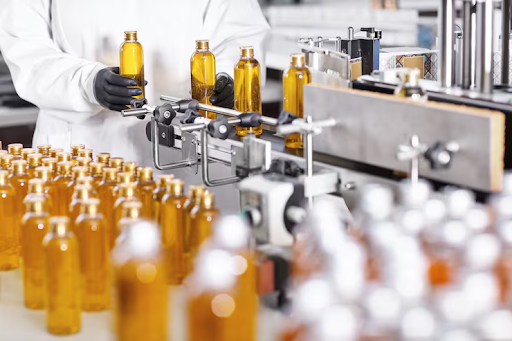
The transition from bench-scale formulation to commercial production is consistently cited as one of the highest-risk stages of new product development. Process consulting services address this risk by designing manufacturing specifications that anticipate the process variables of commercial production equipment, coordinating scale-up trials at co-manufacturer facilities, troubleshooting production variances, and establishing in-process quality control protocols that maintain product consistency across production batches.
Consulting Engagement Models
Food and beverage consulting services are delivered through several engagement structures depending on the scope and duration of the project. Project-based engagements with defined deliverables and fixed fees are appropriate for bounded scope work: a formulation development project, a regulatory label audit, or a food safety plan update. Ongoing retainer arrangements suit brands that need continuous advisory support across multiple projects or that lack in-house technical staff entirely. Some consultants embed part-time within client organizations — providing a fraction of a full-time equivalent role at a significantly lower cost than a full-time hire.
Return on Investment in Food Consulting
The return on investment in food and beverage consulting services is typically clearest in three scenarios: preventing a costly development failure (a formulation that cannot be manufactured at commercial scale, or a label that triggers an FDA action); accelerating time to market (compressing a twelve-month development program into six months through expert guidance); and avoiding the cost of a full-time specialist hire for a role that does not require continuous occupation.
Conclusion
Food and beverage consulting services are not a luxury reserved for large, well-resourced manufacturers — they are a practical, cost-efficient mechanism for accessing specialized expertise at exactly the scale and duration each project requires. For the growing food business navigating the complex path from product concept to commercial success, the right consulting partner is one of the most valuable investments available in the development process.