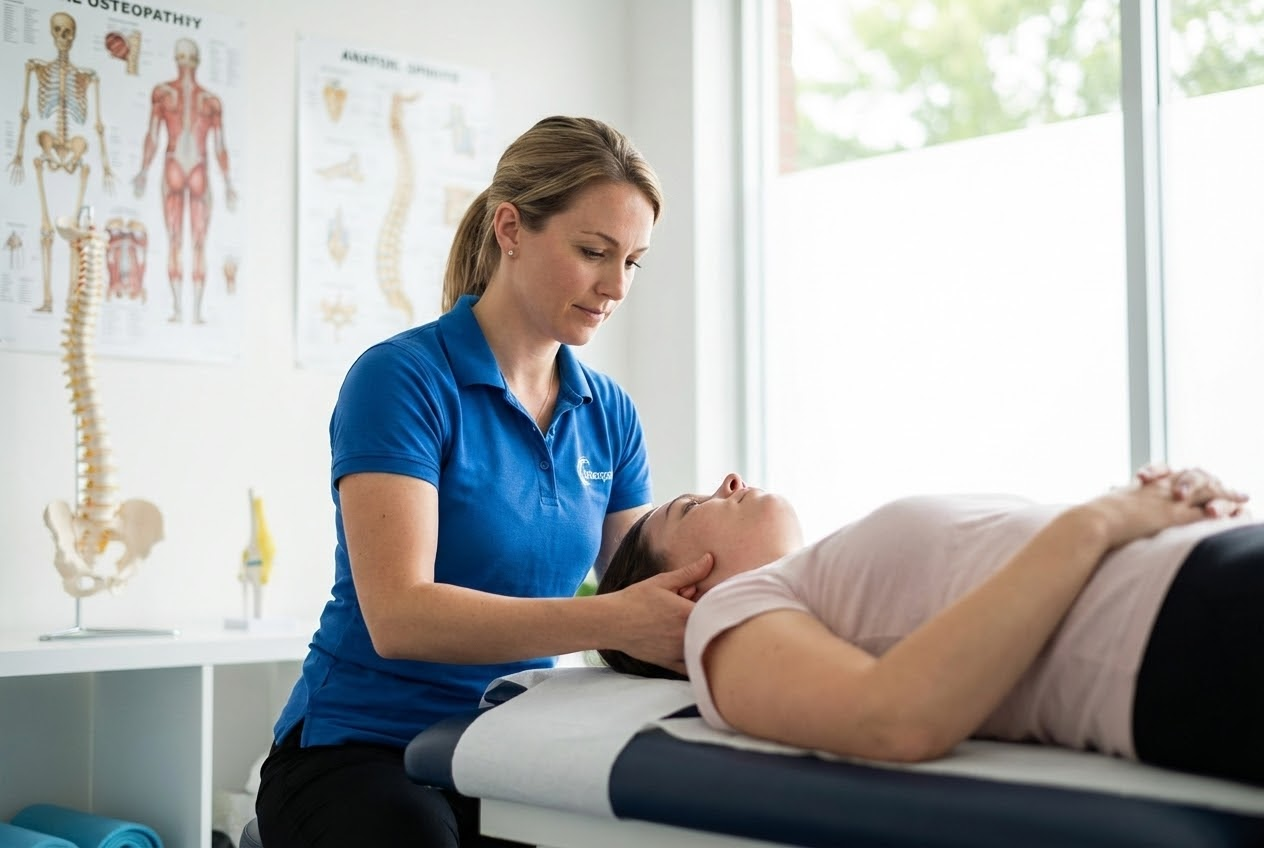
Osteopathic treatment in East Gwillimbury is based on a fundamentally different view of the human body than most conventional and alternative therapies. Instead of isolating symptoms, osteopathy looks at how the body’s structure, movement, and internal systems work together. When one part is restricted, strained, or misaligned, the effects spread through the entire system. Osteopathic care is designed to identify and correct those underlying mechanical problems so the body can heal itself more efficiently.
While many therapies focus on treating pain directly, osteopathy focuses on restoring normal function — which is why its results often last longer.
The Osteopathic Philosophy
The defining feature of osteopathy is its whole-body, systems-based approach.
Osteopaths operate under several core principles:
- The body is a single, integrated unit
- Structure and function are directly connected
- The body has a natural ability to self-heal
- Restrictions in movement impair health
This means pain in one area is rarely treated in isolation. A knee problem may come from hip mechanics. Shoulder pain may be linked to spinal stiffness. Digestive symptoms may be related to rib, diaphragm, or abdominal tissue restrictions.
Unlike therapies that chase symptoms, osteopaths look for why the body is not functioning correctly.
How Osteopathy Differs From Other Therapies
Most therapies fall into two categories:
- Symptom management (pain relief, inflammation reduction)
- Local treatment (treating only where it hurts)
Osteopathy does neither.
Osteopathic treatment works by:
- Identifying mechanical restrictions
- Improving circulation and nerve signaling
- Restoring mobility in joints, muscles, fascia, and organs
- Supporting the body’s self-regulating systems
This is why osteopathy is often effective when standard physiotherapy, massage, or chiropractic care has failed — it looks deeper and wider.
Conditions Osteopathy Commonly Treats
Osteopathy is not limited to back or joint pain. It is used for a wide range of functional health issues.
Musculoskeletal pain
Neck pain, back pain, sciatica, shoulder injuries, repetitive strain, sports injuries, and postural problems respond well to osteopathic care because treatment restores movement instead of masking pain.
Headaches and migraines
Many headaches originate from neck stiffness, jaw tension, or restricted blood and fluid flow in the skull. Osteopathic techniques address these physical contributors.
Digestive and abdominal issues
Osteopaths treat the mobility of the stomach, intestines, and surrounding tissues. Restrictions in these areas can interfere with digestion, bloating, reflux, and constipation.
Breathing and respiratory issues
Poor rib and diaphragm movement can limit oxygen intake. Osteopathic treatment improves chest expansion and breathing mechanics.
Chronic pain and fatigue
When tissues and joints cannot move normally, circulation and nerve signaling suffer. Osteopathy helps normalize these systems.
Osteopathic Treatment Techniques
Osteopathy uses manual therapy only — no machines, injections, or drugs.
Common techniques include:
Soft tissue techniques
These release muscle tension, improve blood flow, and reduce pain by working directly on muscles, tendons, and connective tissue.
Articulatory techniques
Gentle joint movements restore range of motion and eliminate stiffness.
Myofascial release
Fascia connects everything in the body. When it becomes tight, pain spreads. Osteopaths free these restrictions to restore movement.
Cranial osteopathy
Subtle techniques applied to the skull, neck, and spine improve nervous system and fluid movement.
Visceral manipulation
The organs must move freely. Osteopaths use gentle methods to improve organ mobility and function.
Each technique is chosen based on what the body needs — not on a preset routine.
What to Expect During an Osteopathic Session
Osteopathic treatment is highly individualized.
A session usually includes:
- A full medical history
- Postural and movement assessment
- Hands-on examination of muscles, joints, and tissues
- Targeted manual treatment
- Advice on posture, exercise, and self-care
Sessions typically last 45–60 minutes. The osteopath treats not just the painful area, but all related restrictions contributing to the problem.
There is no “standard” treatment — everything is tailored to the patient.
Choosing a Qualified Osteopath in East Gwillimbury
Not all practitioners are equal. In Canada, osteopathic manual practitioners complete extensive private training programs.
Look for:
- Graduation from a recognized osteopathic college
- Membership in professional associations
- Ongoing education
- Strong patient reviews
- Clear, transparent communication
Avoid anyone making exaggerated claims or offering guaranteed cures.
Conclusion
Osteopath treatment in East Gwillimbury offers a fundamentally different form of healthcare. Instead of chasing pain, osteopathy restores balance, movement, and function across the entire body. By working with the body’s natural healing mechanisms, it provides long-term relief rather than short-term symptom suppression.
For people who want real, structural solutions — not just temporary fixes — osteopathy stands apart.